
News
G-SHOCK 2500 Series: Casio Brings Analog Hands to the Square Case at Volume Scale
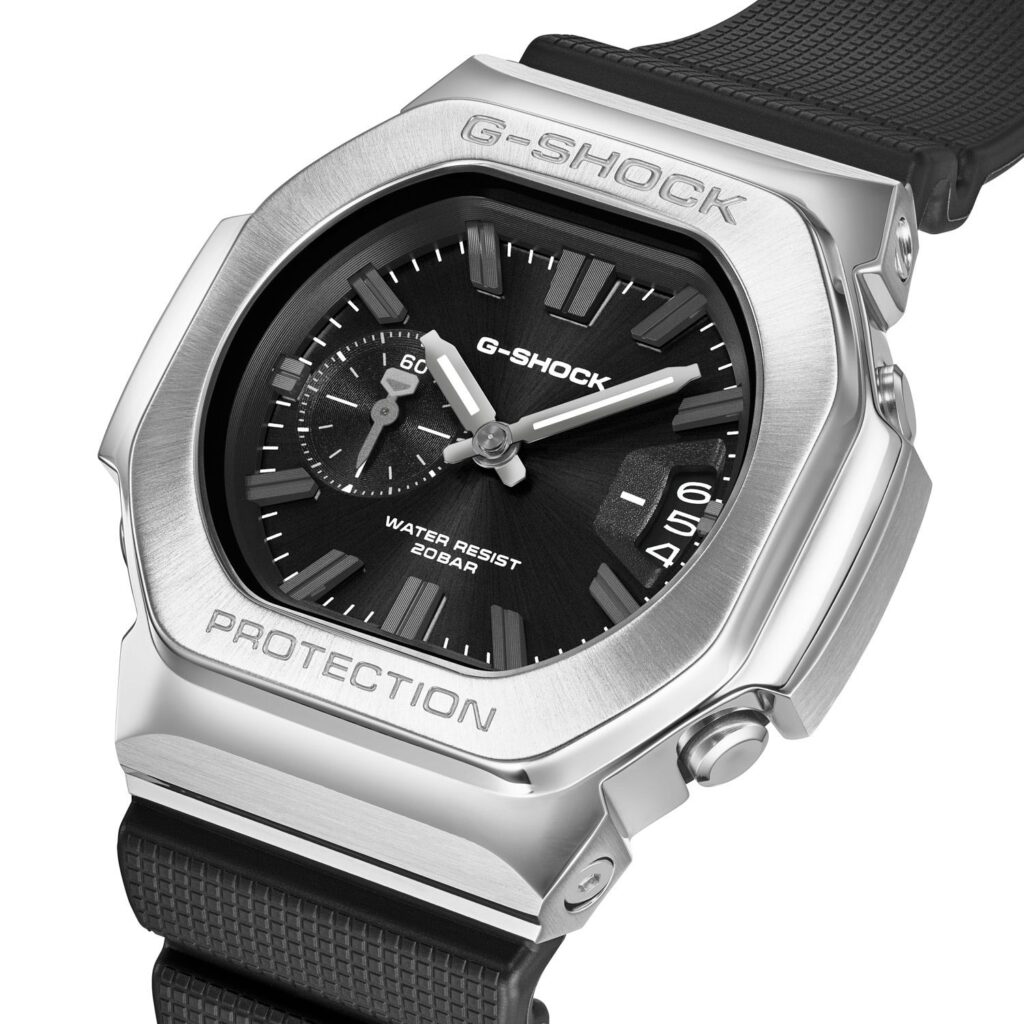
Casio has launched the G-SHOCK 2500 series, a collection that replaces the brand’s signature digital display with traditional analog hands while retaining the protective case architecture and shock resistance that define the line. The move represents a significant shift in how G-SHOCK constructs volume sports watches, introducing analog timekeeping to the square case format that has anchored the brand since the original DW5000C in 1983.
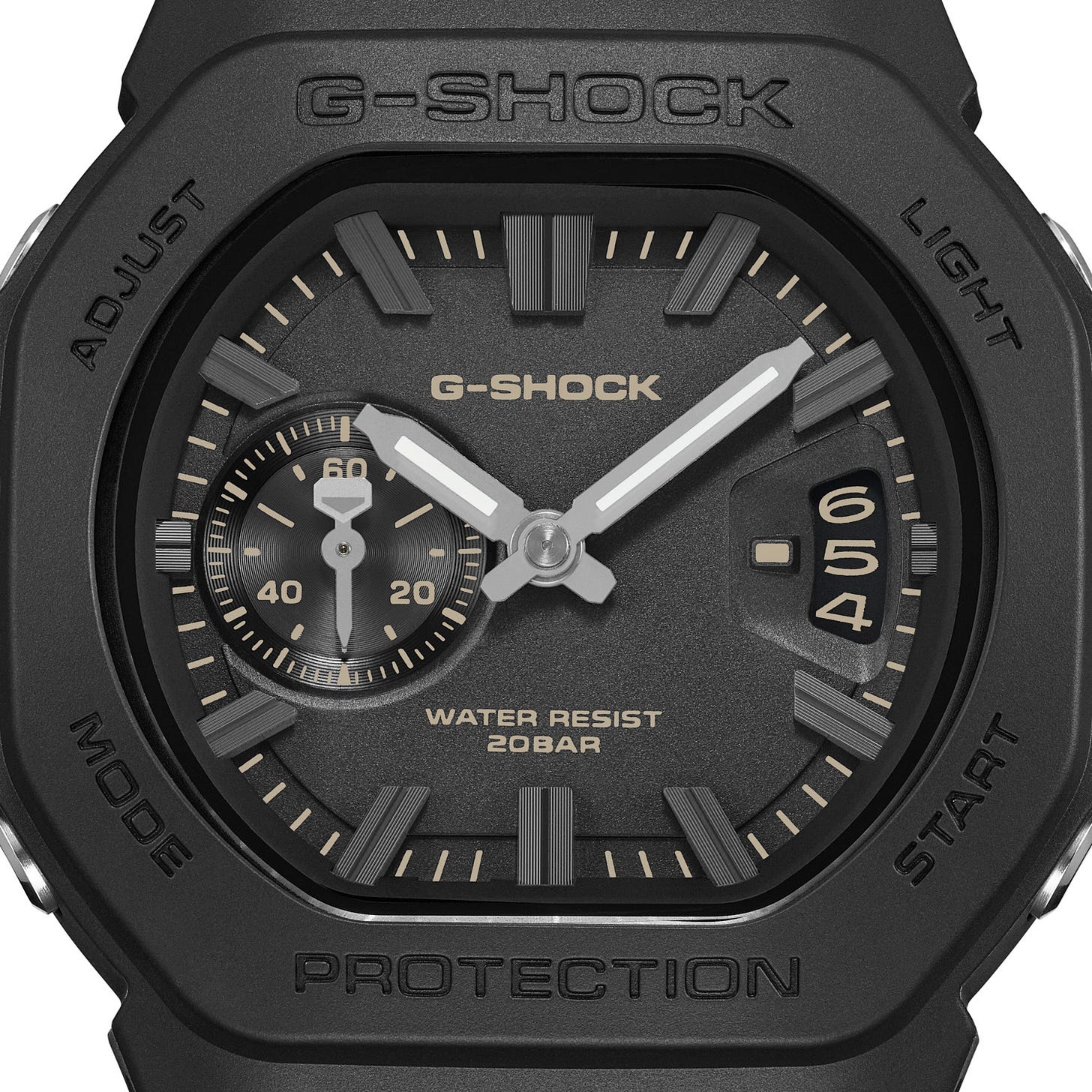
The 2500 series uses a three-hand analog layout with a feature Casio calls Multi-Mission Date, a three-cell display positioned at 3 o’clock. This module does more than show the date. It switches between calendar information, operating modes, stopwatch minutes, and watch settings, preserving some of the information density that digital G-SHOCK models deliver through their LCD screens. The calendar is perpetual through 2099, automatically adjusting for varying month lengths and leap years once the initial date is set.
At 9 o’clock, a small seconds hand can stop to conserve battery power, restarting when needed. Casio claims this contributes to a five-year battery life, a specification that matters in the volume segment where service intervals and user convenience directly affect brand loyalty and repeat purchase.
Shock Structure for Moving Hands
The engineering challenge in the 2500 series is not the dial layout but the shock protection. Digital G-SHOCK watches protect an LCD module and circuit board; analog models must secure moving hands that can be displaced by impact. Casio has developed what it describes as a magnetic hand-holding structure to address this. The system is designed to keep the hands in position during shock events, a necessary adaptation if the analog 2500 is to meet the durability expectations attached to the G-SHOCK name.
How well this structure performs in the field will determine whether Casio can extend the analog format across its G-SHOCK range or whether the 2500 remains a niche experiment. Traditional analog quartz movements are not inherently fragile, but they are not designed for the repeated impact testing that G-SHOCK models undergo. The magnetic hand-holding structure is Casio’s answer, though the company has not disclosed whether this is a proprietary movement modification or a module added to a standard quartz caliber.
Three Tiers, Same Module
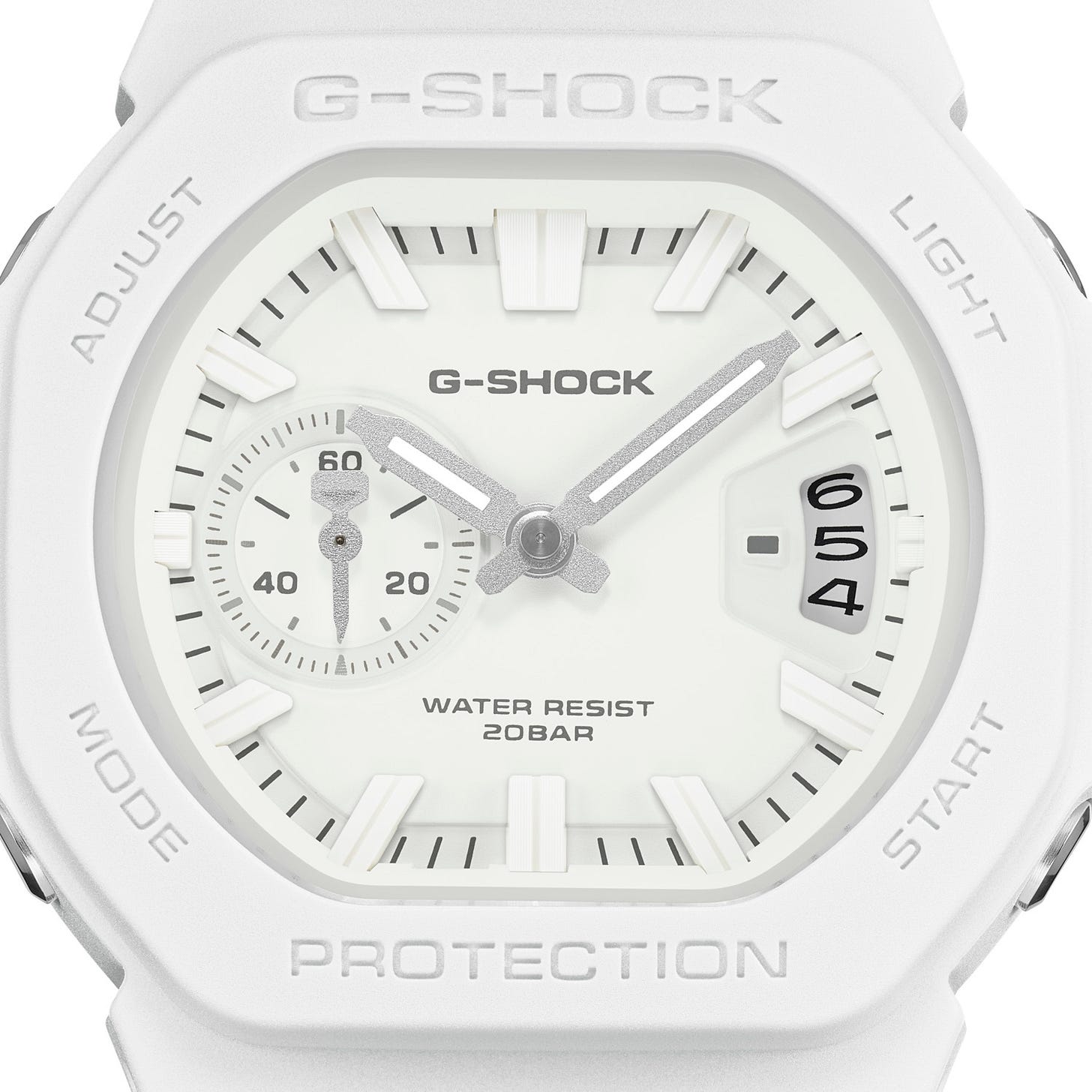
Casio is offering the 2500 series in three material tiers. The GAC2500 uses a resin case and is available in four references: GAC2500-1A, GAC2500-3A, GAC2500-7A, and GAC2500-9A. The GMC2500 adds metal accents and comes in three versions: GMC2500-1A, GMC2500-1A8, and GMC2500-9A. At the top, the GMC2500D features a full-metal bracelet and is offered in two references, GMC2500D-1A and GMC2500D-1A2.
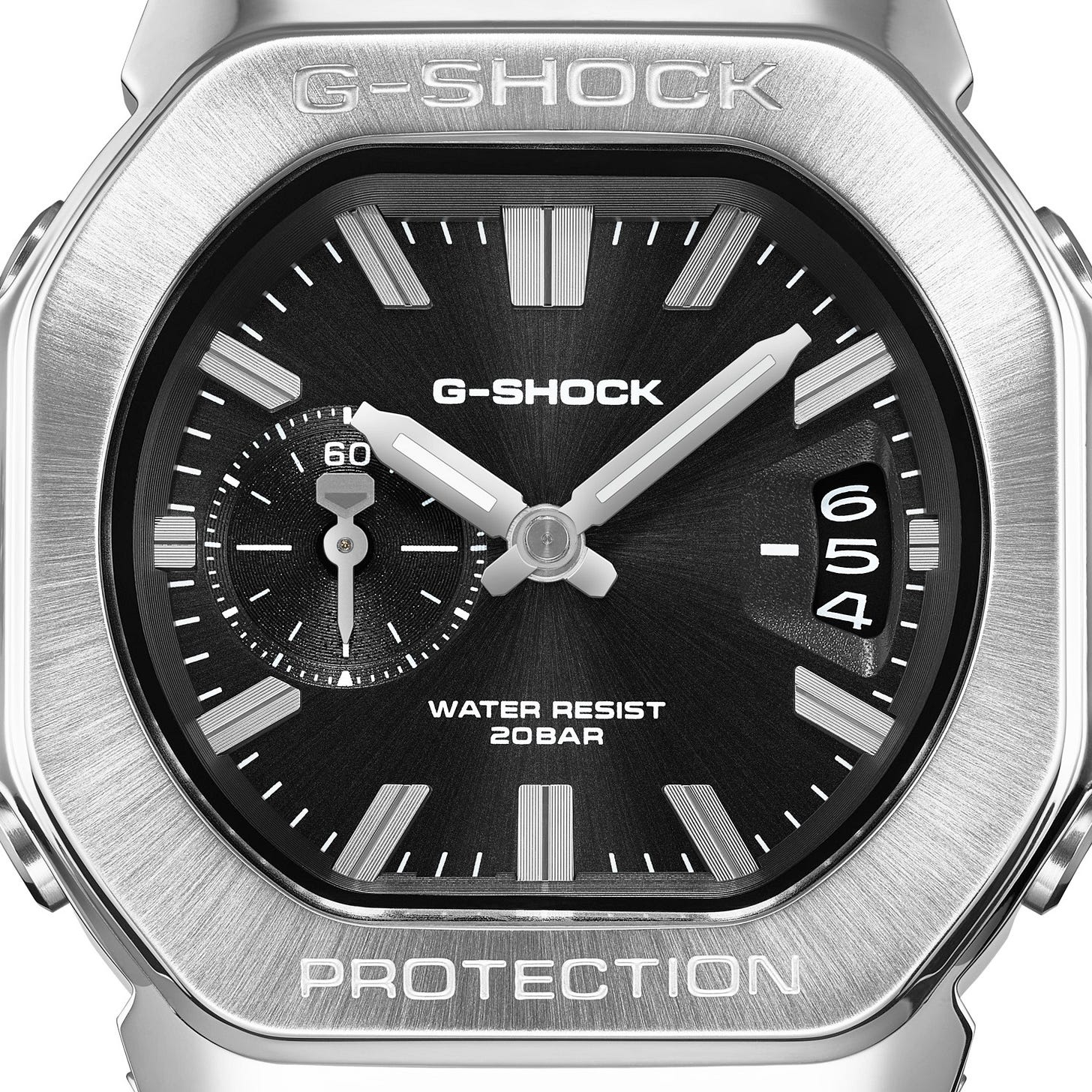
Select models incorporate bio-based resin components, part of Casio’s broader material strategy. The tiered approach mirrors how fashion and licensed brands structure their own collections, offering entry-level resin, mid-tier metal-accented, and premium bracelet versions of the same design.
All models in the 2500 series offer 200 meters of water resistance, a stopwatch measuring elapsed time in one-second increments, and LED illumination. The case retains G-SHOCK’s protective button guards and an octagonal-inspired bezel, though the edges have been rounded compared to the sharper lines of the original DW5000C. The result is a watch that reads as G-SHOCK but sits closer to conventional sports-watch proportions.
What It Means for Volume Analog Production
The 2500 series is significant because it tests whether G-SHOCK’s brand equity—built almost entirely on digital displays and resin cases—can transfer to analog dials without diluting the product’s identity. For brands and OEM partners working in the sub-200-dollar sports-watch segment, the 2500 offers a case study in how to adapt a strong design language to a different movement architecture.
The Multi-Mission Date module is the most interesting design decision. It preserves functionality that would otherwise be lost in the shift from digital to analog, and it does so without cluttering the dial with subdials or pushers. Whether buyers in the volume segment will use those modes regularly is another question, but the module gives the 2500 a feature set that justifies its position within the G-SHOCK range.
The 2500 series will be available in November 2026 through select retailers, the G-SHOCK Soho Store, and the brand’s official website. The collection’s success will depend on whether Casio can convince existing G-SHOCK buyers that analog hands belong on a square case, and whether new buyers see the 2500 as a credible alternative to the digital models that still dominate the line. For now, it is a well-executed experiment in expanding G-SHOCK’s design vocabulary without abandoning the shock-resistant construction that defines it.